Upper Gulf Shipping Reopens with New Routing: What Exporters to Iraq, UAE, Saudi Arabia, Kuwait, and Qatar Must Know with TIC Quality Control (TICQC)
Upper Gulf Shipping Reopens with New Routing: What Exporters to Iraq, UAE, Saudi Arabia, Kuwait, and Qatar Must Know
Upper Gulf shipping has officially resumed, bringing positive news for exporters across key Middle East markets. However, this reopening comes with a significant shift in logistics strategy that businesses must understand before planning shipments.
Hapag-Lloyd AG has confirmed the resumption of bookings to the Upper Gulf through alternative routing solutions. At the same time, carriers are avoiding direct transit via the Strait of Hormuz, a critical maritime passage traditionally used for cargo movement into the region.
This development impacts exporters dealing with Iraq, the UAE, Saudi Arabia, Kuwait, and Qatar. Understanding the new shipping model is essential for maintaining efficiency, avoiding delays, and managing costs.
Upper Gulf Shipping Update: What Has Changed?
Upper Gulf shipping has not returned to its previous structure. Instead, logistics providers have introduced a new operational model designed to reduce risk while maintaining cargo flow.
Previously, most shipments to the Upper Gulf relied on direct vessel transit through the Strait of Hormuz. Now, shipping lines are using:
- Alternative shipping routes via regional hubs
- Third-party feeder vessel networks
- Multi-modal logistics involving sea and land transport
This shift reflects a broader trend in global supply chain management, where flexibility and resilience are becoming more important than fixed routing.
Why the Strait of Hormuz Is Being Avoided
The Strait of Hormuz remains one of the most important shipping routes globally, connecting the Persian Gulf with international markets. However, due to ongoing regional risks, carriers are reducing reliance on this corridor.
Instead of halting operations, shipping companies are adapting by:
- Avoiding high-risk maritime zones
- Maintaining supply chain continuity through alternative routes
- Ensuring safer cargo movement
This approach allows Upper Gulf shipping to continue while minimizing disruptions.
New Shipping Routes to the Upper Gulf Explained
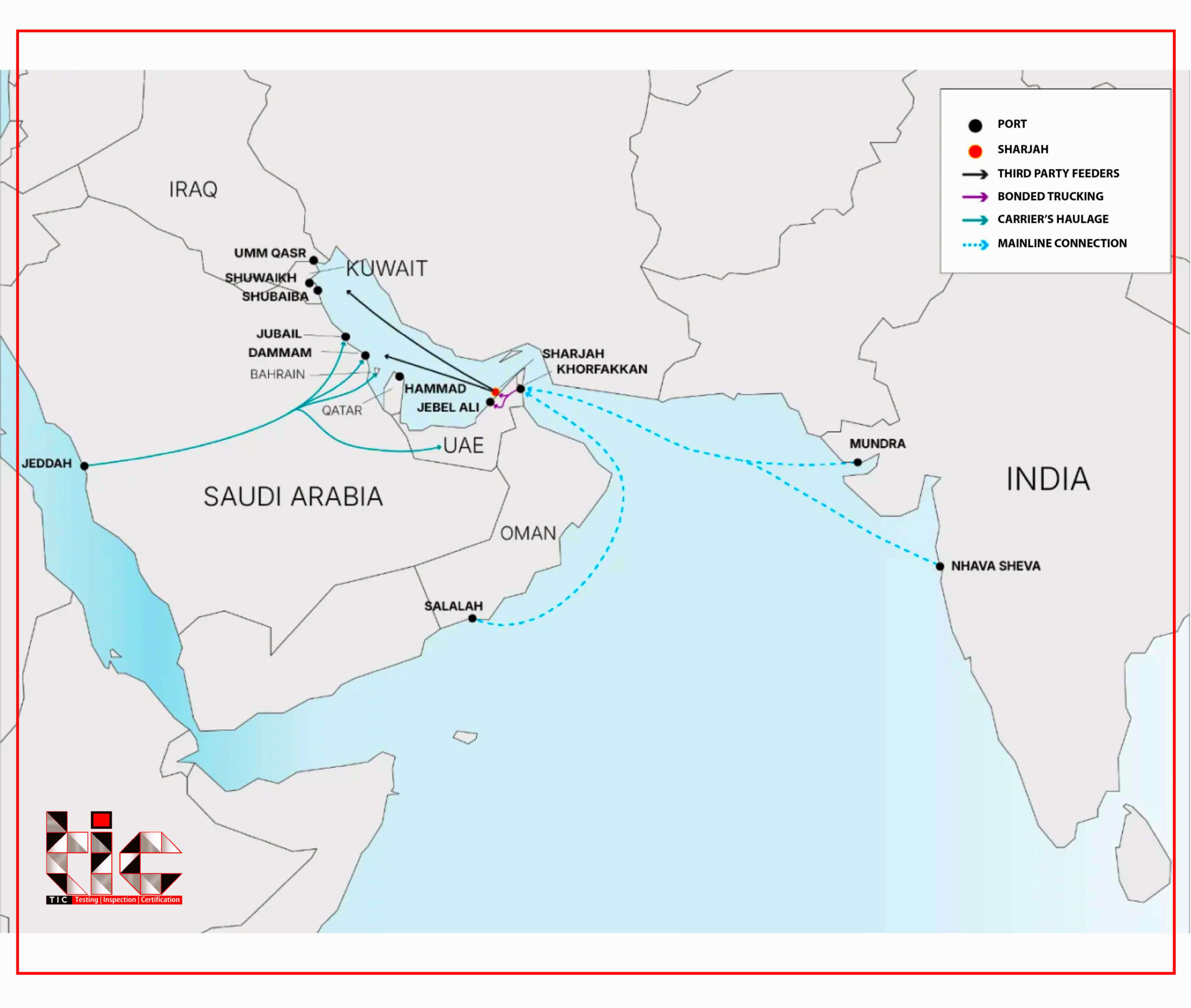
The new Upper Gulf shipping model involves a combination of sea and land transport, replacing direct vessel calls with a more flexible system.
Step-by-Step Routing Process
- Cargo is shipped to transshipment hubs such as Sharjah
- Containers are transferred to feeder services
- Bonded trucking connects Sharjah and Khorfakkan
- Feeder vessels transport cargo to Upper Gulf destinations
This system supports shipping to Iraq, UAE, Saudi Arabia (Dammam), Kuwait, and Qatar.
While effective, this process introduces additional coordination requirements and may impact delivery timelines.
Shipping to Iraq and GCC Countries: What Exporters Should Expect
For exporters, Upper Gulf shipping now requires careful planning and a clear understanding of the new logistics environment.
1. Variable Shipping Schedules
Feeder vessel operations are not fixed. Shipping schedules depend on:
- Regional safety conditions
- Port operations
- Vessel availability
This means exporters must remain flexible when planning shipments.
2. Increased Transit Time
Due to additional steps in the logistics chain, shipping to the Upper Gulf may take longer than before. Bonded trucking alone can add approximately five days to transit time.
3. Cargo Handling Limitations
The current system supports:
- Dry cargo
- Reefer cargo
- In-gauge special cargo
Oversized shipments may require alternative logistics solutions.
4. Cost Considerations
Alternative routing can impact shipping costs due to:
- Additional handling charges
- Transshipment fees
- Extended logistics processes
Exporters should evaluate pricing strategies to maintain profitability.
Focus on Shipping to Iraq: Compliance Is Critical
Shipping to Iraq requires more than logistics planning. Exporters must also meet strict compliance and regulatory requirements.
These include:
- Certificate of Conformity (CoC)
- Product inspection and verification
- Accurate documentation
With the added complexity of new routing systems, even small documentation errors can result in delays or shipment rejection.
How Exporters Can Adapt to New Upper Gulf Shipping Conditions
To succeed in the current environment, exporters should adopt a more strategic approach to logistics.
Plan Ahead
Early shipment planning reduces the risk of delays caused by irregular schedules and extended transit times.
Work with Reliable Partners
Close coordination with logistics providers and compliance experts ensures smoother operations.
Focus on Documentation Accuracy
For markets like Iraq, proper documentation is essential to avoid customs issues and delays.
Build Flexibility into Supply Chains
Businesses should prepare for changing conditions by maintaining flexible shipping and sourcing strategies.
The Bigger Picture: A Shift in Global Logistics
The changes in Upper Gulf shipping reflect a larger transformation in global supply chains.
Key trends include:
- Reduced reliance on single shipping routes
- Increased use of multi-modal transport
- Greater focus on risk management and resilience
These trends are shaping the future of logistics, making adaptability a key success factor for exporters.
How TICQC Supports Exporters to Iraq
TICQC provides essential support for exporters navigating complex shipping and compliance requirements.
Our services include:
- Certificate of Conformity (CoC) for Iraq
- Product inspection and verification
- Guidance on regulatory compliance
With evolving logistics conditions, ensuring compliance is more important than ever for smooth cargo movement.
Conclusion
The reopening of Upper Gulf shipping is a positive step for global trade, but it comes with important changes. By avoiding the Strait of Hormuz and adopting alternative routing strategies, carriers are prioritizing safety and continuity.
For exporters to Iraq, UAE, Saudi Arabia, Kuwait, and Qatar, success now depends on:
- Strategic planning
- Flexible logistics approaches
- Accurate compliance processes
Businesses that understand and adapt to these changes will be better positioned to maintain efficiency and competitiveness in the evolving global trade environment.

Comments
Post a Comment